Reiki Hinckley
Reiki Healing at Peace of Mind Health, Hinckley

There is a particular kind of rest that most people rarely experience. Not the rest of sleep — which for many is fitful and unrestoring — but a deep, somatic settling. A state in which the nervous system genuinely lets go. In which the body stops bracing, the breath deepens without effort, the mind grows quiet without being forced, and something underneath all the noise and tension begins to move towards balance.
This is what Reiki consistently offers. And it is why, in an era of chronic stress, nervous system dysregulation and a growing collective hunger for something that actually reaches the source of how people feel, Reiki is experiencing a significant and well-deserved resurgence of interest.
At Peace of Mind Health in Hinckley, Reiki is offered by Jeni — an experienced energy therapist with deep training across Usui Reiki, Angelic Reiki, Shamanic Healing and Soul Journey Work — as a profound therapeutic experience, not simply a relaxing treat.
What Reiki Is — and Where It Comes From
Reiki is a Japanese energy healing practice developed by Mikao Usui in the early twentieth century, drawing on ancient traditions of working with universal life energy — known as Ki in Japan, Chi in China, Prana in the Indian tradition, and Mana in Hawaiian culture. The word Reiki itself translates as “universal life energy”: Rei meaning universal or spiritual wisdom, Ki meaning the vital life force that flows through all living things.
The foundational understanding of Reiki — and of the many energy traditions it connects with — is that the body is not merely a physical structure. It is an energy system. And when that energy flows freely and in balance, the conditions are created for health, vitality and wellbeing. When energy becomes stagnant, blocked or depleted — through stress, trauma, illness, emotional holding or sustained pressure — the body’s natural capacity for self-regulation and self-healing is compromised. Reiki works to restore that flow.
A Reiki practitioner, attuned through a specific training lineage, channels this energy through their hands — either with gentle touch or by holding the hands just above the body — allowing it to move to wherever it is most needed. The practitioner does not direct or decide where the energy goes. The body’s own intelligence does that.
The Science — What Is Actually Happening
Reiki has now been the subject of over 140 peer-reviewed research papers. While the field continues to grow and larger-scale trials are ongoing, the evidence already published is genuinely compelling — particularly in the areas of nervous system regulation, pain reduction, anxiety and stress.
A study published in Frontiers in Psychology found that a single Reiki session increased heart rate variability and shifted the body’s autonomic balance towards parasympathetic dominance — the body’s rest-and-restore state — within a single session. This is significant. Heart rate variability is one of the most trusted scientific markers of nervous system health and resilience. When it increases, the body is demonstrably moving out of chronic sympathetic activation — out of fight-or-flight — and into the physiological conditions required for genuine healing, immune function, deep sleep and emotional regulation.
A 2025 study published in Frontiers in Psychology, analysing data from 59 community-based Reiki events involving high-stress participants, found an average reduction in perceived stress of 72.62% and a reduction in pain of 63.34% — following sessions of just ten minutes. A 2024 meta-analysis examining Reiki’s therapeutic effects on anxiety found significant benefits across diverse patient groups including people living with cancer, chronic illness and surgical recovery.
A 2025 placebo-controlled trial found that 55% of patients with knee osteoarthritis experienced clinically significant pain reduction following Reiki, compared to only 20% in the placebo group. A 2026 study concluded that Reiki has a significantly positive effect on pain for up to 24 hours following surgery and reduces the need for pain medication. In oncology settings, patients reported their average pain scores dropping from 4.4 to 2.32 following completed Reiki interventions.
These are not small or incidental findings. They point consistently to a therapy that works — and that works, at least in part, through its direct action on the autonomic nervous system.
Reiki and the Nervous System
One of the most important things to understand about Reiki — and why it is resonating so powerfully with people who are exploring nervous system health — is that its primary therapeutic action appears to be the activation of the parasympathetic nervous system.
The parasympathetic system is the body’s rest-and-restore mode. It is the physiological state in which digestion functions properly, sleep comes deeply, immune cells do their repair work, inflammation decreases, cortisol normalises, and the brain has access to its full capacity for clear thought, emotional regulation and creativity. It is the state in which the body heals.
Most people in modern life spend far too little time here. Chronic stress, unresolved emotional experience, poor sleep, relentless stimulation and the demands of contemporary living keep the sympathetic nervous system — the fight-or-flight system — chronically activated. The body pays a measurable toll: elevated cortisol, disrupted sleep, compromised immunity, increased inflammation, heightened pain sensitivity, digestive difficulties, emotional volatility and fatigue that rest does not touch.
Reiki reliably shifts this. The quality of stillness and energetic attunement that characterises a Reiki session creates the felt conditions of safety that the nervous system needs in order to soften its vigilance. And as it does, the parasympathetic system activates — not because the mind has decided this, but because the body has been given the conditions it needs to return to balance.
Many clients describe this shift as one of the most profound experiences of physical and mental ease they have ever felt. For those whose nervous systems have been in a state of chronic activation for months or years, this is not a small thing. It is genuinely therapeutic.
Reiki and Pain
Pain is not simply a mechanical signal. It is processed, amplified and modulated by the nervous system — and significantly influenced by the body’s physiological state. When the nervous system is in a chronic state of stress and activation, pain sensitivity increases. When the parasympathetic system is activated and the body enters a state of genuine rest, the perception of pain decreases.
This is one reason why the pain research around Reiki is so consistent. Reiki does not mask pain or interfere with its signals. It changes the physiological conditions in which pain is experienced — reducing the nervous system’s amplification of pain signals, encouraging the release of the body’s own natural painkillers (endorphins), and creating the relaxed, restored state in which the body can begin to address the underlying conditions that are sustaining the pain.
For people living with chronic pain conditions — fibromyalgia, arthritis, back pain, migraines, post-surgical pain — Reiki offers a gentle, non-invasive and evidence-supported complement to whatever other approaches they are using.
Angelic Reiki — A Deeper Layer of Healing
Alongside Usui Reiki, Jeni is trained in Angelic Reiki — a powerful form of energy healing that works within the angelic kingdom of light, channelling healing energies of a particularly high and pure vibration. Angelic Reiki works on the same principles as Usui Reiki but with a specific focus on the soul and multidimensional levels of the being, and is particularly suited to those who are navigating significant spiritual growth, soul-level healing, or deep emotional release.
As with all energy work at Peace of Mind Health, Angelic Reiki sessions are completely tailored to what you need on the day — Jeni works intuitively, allowing the energy and your body’s own wisdom to guide the session.
What a Session Involves
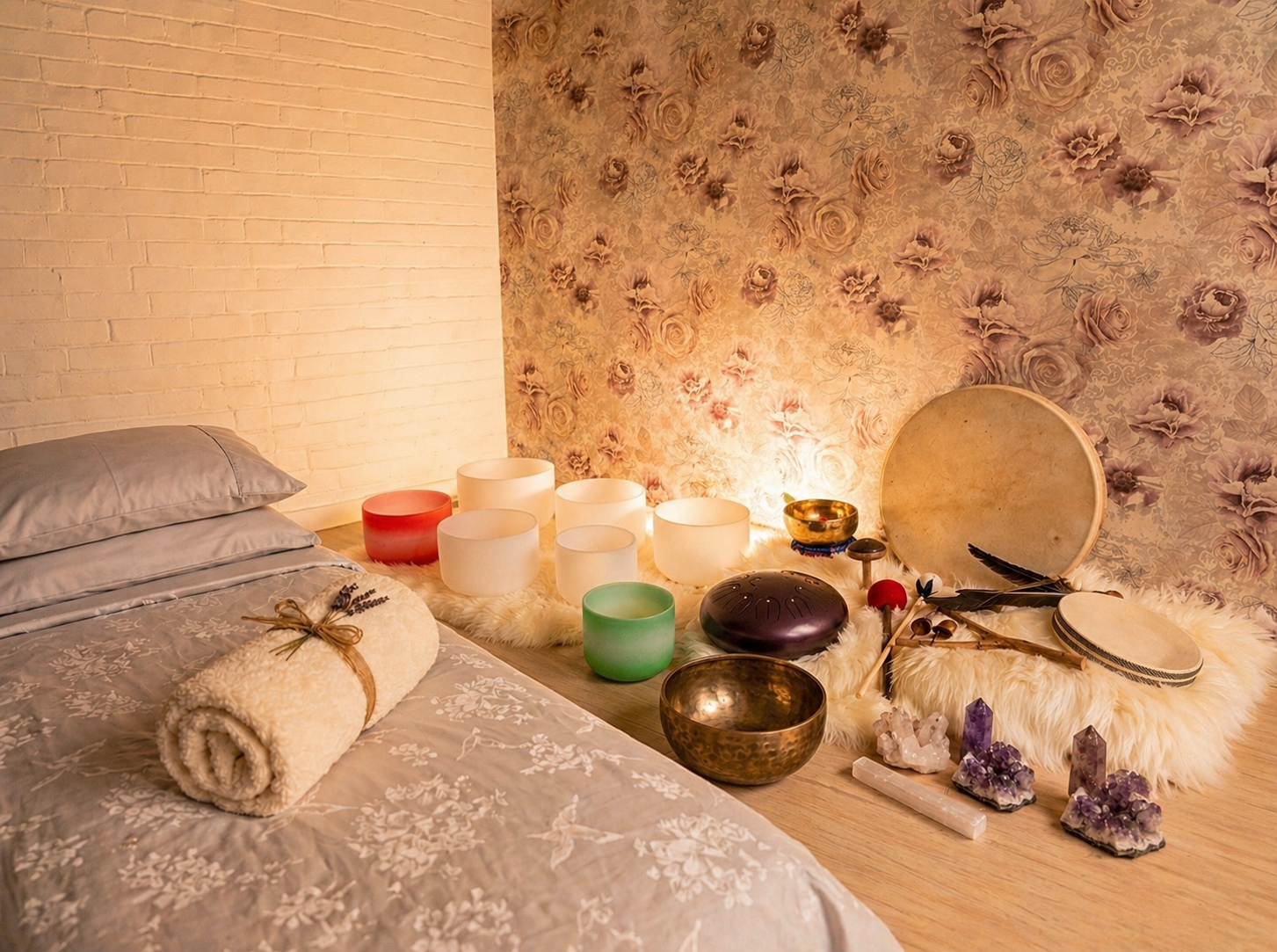
You arrive and are welcomed into a calm, quiet treatment room in Hinckley. After a brief conversation about what you are experiencing and what you are hoping for, you lie comfortably on the treatment couch — fully clothed, covered with a light blanket if you wish, supported by pillows. Nothing is required of you except to receive.
Jeni works with her hands either gently resting on or hovering just above specific areas of the body, following the body’s energy system and responding intuitively to what she senses. Most clients describe a feeling of warmth, tingling, heaviness or lightness — or simply a deepening sense of peace. Many drift into a deeply meditative state. Some fall asleep. All of these responses are welcome and appropriate.
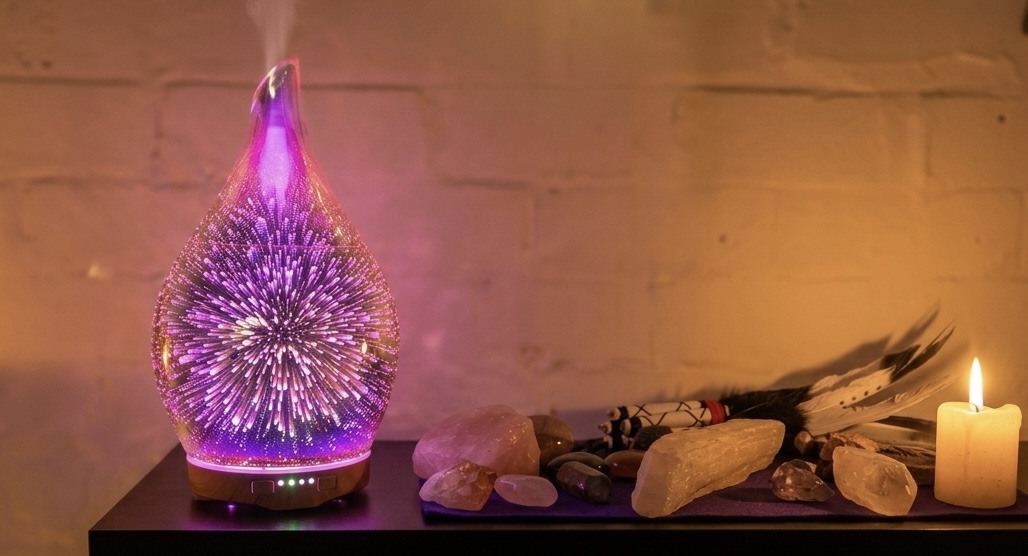
Sessions may incorporate crystal healing, chakra balancing or sound therapy where this feels supportive — creating a layered, multi-sensory healing experience that meets you exactly where you are.
What Reiki Can Help With
Because Reiki works at the level of the body’s energy system and autonomic nervous system, its benefits extend across a wide range of conditions and experiences. Clients commonly seek Reiki for support with:
- Chronic stress and anxiety
- Burnout and nervous system exhaustion
- Chronic pain and physical tension
- Sleep difficulties and insomnia
- Fatigue and low energy
- Grief, loss and major life transitions
- Emotional trauma and feeling overwhelmed
- Depression and low mood
- Hormonal imbalance and reproductive health
- Cancer care and recovery from serious illness
- Post-surgical recovery and pain management
- Spiritual disconnection or a sense of being lost
- Preparation for and integration after other healing work
- General maintenance of wellbeing and energetic balance
Reiki is completely safe and non-invasive. It has no contraindications and is suitable for people of all ages and health conditions — including those undergoing medical treatment, those who are pregnant, children and the elderly. It works beautifully alongside conventional medicine and other therapeutic approaches, and many clients find it enhances the effectiveness of everything else they are doing.
Reiki Works Beautifully Alongside
At Peace of Mind Health, Reiki often forms part of a wider healing journey. It combines particularly well with Sound Healing, Chakra Balancing, Clinical Reflexology, Somatic Therapy and Shamanic Healing — each approach supporting the others in creating the conditions the whole being needs to restore.
Aftercare
To support your body in integrating the benefits of your Reiki session, we recommend:
- Drinking plenty of water throughout the rest of the day to support energy flow and gentle detoxification
- Resting where possible and avoiding intense physical or emotional demands
- Avoiding alcohol and caffeine for the remainder of the day
- Eating lightly and nourishing yourself with care
- Allowing any emotional shifts, vivid dreams or unexpected physical sensations to pass without resistance — these are signs of rebalancing
Some clients experience a brief healing response in the 24 to 48 hours following a session — mild tiredness, increased emotion, or a temporary intensification of physical symptoms before they ease. This is entirely normal and is the body’s way of processing and coming back into alignment. If anything feels strong or concerns you, please do get in touch.
Ready to Experience Reiki?
If you are curious about Reiki — whether you are completely new to energy healing or have experienced it before and are ready to go deeper — Jeni would love to welcome you. There is no obligation in making contact, and she is always happy to answer questions before you book.
Please get in touch for a confidential chat, or read what clients have to say here.
You can also explore:
- Treatment Prices
- Jeni’s Qualifications
- Sound Healing
- Chakra Balancing
- Theta Healing
- Shamanic Healing and Soul Retrieval
- Read the Blog
- Follow on Facebook
Website: www.peaceofmindhealth.co.uk
Email: [email protected]
Tel: 07531 191 688
“Be free… Be happy… Be healthy.”